Ever watched the Tour de France and thought, “I could do that!”? The team at Precision Fuel & Hydration decided to put it to the test in an eye-opening experiment, challenging an amateur triathlete to go head-to-head with some of the world’s top cyclists at Lotto’s training camp.
The result was a true eye opener into how us mere mortals stack up against the elite athletes who dominate the sport.



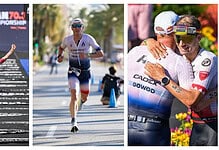
Ant Gritton, a member of the Precision Fuel & Hydration marketing team, is no stranger to competitive sport. With a personal best of 8:34 for an Ironman (placing him within the top 10% of finishers) and a Functional Threshold Power (FTP) of 330 watts, he ranks in the top percentile of age-group triathletes.
However, even with these impressive credentials, Ant found it a real challenge to keep pace with the elite cyclists of the Lotto team, who were effortlessly cruising along, chatting and removing leg warmers mid-ride.
After the challenge, Ant sat down with sports scientist Dr. Lindsey Hunt and Precision Fuel & Hydration co-founder Andy Blow to reflect on the key takeaways from the experience and find out what sets the pros apart.
Seven key insights from the challenge:
- Body Composition:
Ant’s body fat percentage was around 11%, which is a healthy and competitive target for an amateur athlete. However, professional cyclists typically maintain a body fat percentage of 5-7% during the season. This difference highlights the level of conditioning and fine-tuned physique that pro riders achieve, essential for reducing unnecessary weight while maximising power-to-weight ratio during intense efforts like climbs and sprints. - Power:
Ant’s FTP of 330 watts is impressive for an age-group athlete, but it falls short of the output required to compete with the pros. A rider of similar weight in the peloton would likely have an FTP of around 440 watts. This gap highlights the higher-end training and power demands professional cyclists are accustomed to, demonstrating the more targeted and intense training they undergo to develop both sustained power over long durations and explosive bursts when needed. - Training Volume:
Ant typically trains around 12 hours per week, half of which is spent cycling. In comparison, pro cyclists train 18-20 hours a week on average, with peak training periods reaching up to 35 hours. This heavy volume, primarily spent on the bike, ensures that pros not only build endurance but also improve their ability to maintain high-intensity efforts over longer periods. Over the course of a season, pros average 22-23 hours per week on the bike, excluding additional specific efforts like sprint training or recovery rides. - Intensity Distribution in Training:
In short sprints, Ant generated over 700 watts, peaking at 760 watts. In contrast, the pros on the Lotto team can exceed 1600 watts in similar efforts. The key difference lies in their specific training to enhance short, explosive bursts of power, which are essential in professional cycling races. During a four-hour ride, the pros tackle multiple climbs, each requiring high-power efforts, leading to nine intense efforts in total. Ant’s training, however, focuses more on sustained efforts, leaving him less accustomed to the explosive bursts required in professional cycling events. - Nutrition & Hydration:
Ant managed to match the pros in fuelling during the ride, aiming for at least 90 grams of carbohydrate per hour, a benchmark used by elite cyclists. However, the difference became more apparent off the bike. After the first session, Ant experienced a dramatic drop in appetite due to fatigue, making it difficult for him to consume enough calories to recover properly.In contrast, the pros could easily sit down to two or three full plates of pasta, noodles, and rice, replenishing their energy stores with over 100 grams of carbohydrate per hour. This highlights the different nutritional needs of professional cyclists and their ability to metabolise calories efficiently, even after intense rides.
- Technical Skills:
The professionals’ descending and cornering skills were unbelievable. For Ant, even small mistakes, like braking too early or missing an apex, quickly opened a gap. Meanwhile, the pros demonstrated flawless technique, riding shoulder to shoulder, maintaining high speeds without breaking formation. Amateurs like Ant can see major room for improvement in handling descents and tight corners with ease compared with the pros.
Recovery:
Recovery proved a key factor in separating the top performers. After his first ride, Ant struggled with delayed onset muscle soreness (DOMS) and could only manage six hours of sleep. By day two, his energy levels had improved, but the cumulative strain of the two days left him exhausted- taking a real toll on his body. By the second night, he was asleep before his head hit the pillow, barely able to wake up the next morning.
In contrast, the pros were sleeping 8-10 hours a night, with their bodies better equipped to handle the intensity and volume of their training. This difference in recovery time is testament to how professional athletes’ bodies are fine-tuned to cope with the demands of their rigorous training schedules.
The key lessons learnt
Ant’s main takeaway from the camp was that mastering the basics: structured training, solid fuelling strategies, and proper recovery-is essential.
To better understand what sets professional riders apart, the PF&H team spoke with Professor Jan Boone of Ghent University, whose team works closely with Lotto’s performance staff.
Professor Boone explained, “For me, there are three main pillars that enable performance. Firstly, you need a well-structured training program, with a combination of long duration sessions and intervals.
“This needs to be supported by healthy eating and a good fuelling and hydration strategy during training. Lastly, you need to ensure you recover properly between workouts.”
While marginal gains do play a role, Ant observed that professional cyclists dedicate the majority of their time to refining these core fundamentals.
Their lives revolve around consistency in these areas, something Ant quickly realised was crucial to matching their elite level.
Ant added: “There are gains to be had for sure, but even the pros spend most of their time and effort on the fundamentals. Their entire lives are structured with this in mind.”
What this reveals about the talent of pro riders
This experience highlights the immense talent and dedication required to reach the professional level. The athletes we see on TV or hear about in the news are highly skilled, meticulously conditioned, and capable of producing power outputs that far exceed even top amateur athletes like Ant.
The difference in training volume, power-to-weight ratio, and recovery ability is evident, but it’s a testament to the sheer level of commitment, experience, and support these athletes receive.
From structured training plans to flawless technical skills and extraordinary recovery, these cyclists are performing at the very cutting edge of endurance sport.
Dr. Lindsey Hunt, from Precision Fuel & Hydration said: “Simply put, watching a stage of the Tour de France can leave you in awe of the athletes’ remarkable skills. Yet, this experiment really brings to light the immense talent, hard work, and dedication that drive the world’s top cyclists.
“What impressed me most, though, was their top-end power and speed. When they’re pushing to their absolute limits, it’s astonishing just how fast they can go.”
Final thoughts
Andy Blow, co-founder of Precision Fuel & Hydration, summed it up: “Could an age-group athlete keep up with a pro cyclist? No.
“While Ant performed well, there is a clear gap in power, technical skill, recovery, and fuelling. Pro cyclists dedicate their lives to training, with everything from workouts to nutrition and recovery supporting their performance.
“Watching the pros reinforced how mastering the basics, like training, technique, and recovery, makes all the difference.
“When watching the Tour de France this year, remember that it’s not just about raw talent; it’s the result of years of disciplined training, impeccable technique, and strategic recovery. These riders don’t just race; they live and breathe their sport every single day.”
To watch the full challenge, visit: https://www.youtube.com/@precisionfandh/videos